Family Counselling in North Vancouver looks like a perfect place to live, with its coastal mountains and all. But underneath that, a lot of families here are struggling. High living costs and long work hours are putting real pressure on homes, and local counsellors say they’re seeing more couples under serious strain, more parents working through tough separations, and more young people dealing with mental health issues.
Here, family counselling is highly needed, and it can, in fact, prove to be a course-correcting turning point for families struggling with either constant fights or sheer dissociation.
But what actually happens during family counselling? What approaches do counsellors use? And how can you tell whether a family counsellor is the right fit for your family?
This guide covers what family counselling entails, when it can help, what to expect from a session, common therapeutic methods, helpful ideas families can use between sessions, and what to look for when choosing a counsellor in Canada.
What is Family Counselling?
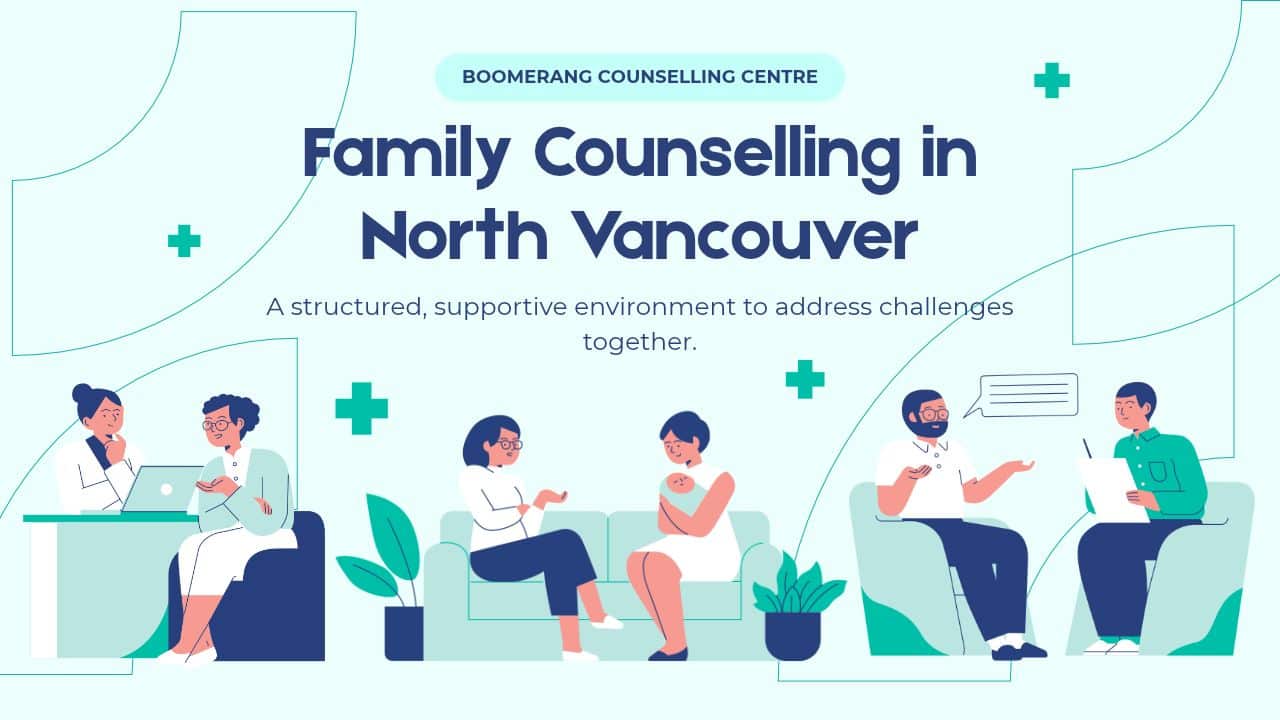
Family counselling in North Vancouver offers a structured, supportive environment to address these challenges together. The counselling isn’t about one person. It holistically helps the family revive relationships, communication styles, family roles, and how family members affect one another.
People often confuse family counselling with family therapy, but in fact it is a type of psychotherapy that considers the family as a whole rather than targeting one member.
Parents, children, siblings, caregivers, or other family members may attend together. Not all sessions, however, include everyone.
A counsellor will work with the whole family, with just parents, with some family members or with smaller groups within the family, depending on the family’s needs.

What is the Aim of Family Counselling?
The aim is to learn more about family interactions and develop new, healthier patterns of communication and interaction. For example, parents’ reactions, family stress, sibling relationships, or adult conflict can influence a child’s behavior.
Family counselling looks at the broader interaction pattern, rather than focusing solely on the child’s need to change. This can be especially helpful when everyone is in the same rut.
Who Can Benefit From Family Counselling in North Vancouver?
Family counselling in North Vancouver isn’t limited to special situations. Many families come in for help when communication is an issue, conflicts are frequent, or life is changing. There are many reasons to seek family counselling, such as:
Communication Problems
Families can get into conflict over many issues, including unmet expectations, responsibilities not properly taken care of, and issues around personal boundaries, routines, or even household rules. Some may stop discussing challenging topics.
Counselling offers a neutral space where each person can share their experience of the event and practise new communication techniques.
Parent-Child Conflict
Adolescence, developmental transitions and periods of major changes in emotional and behavioural functioning can be a time of heightened parenting difficulties.
Family counselling can help parents understand what is happening beneath their child’s behaviour and help children and teens feel heard.
Blended and Step-Family Challenges
Blended families can take time to establish new roles, boundaries, expectations, and routines. A counselling session can help the family adjust to the change in family structure and create space for new experiences and viewpoints.
Mental Health or Substance-Related Concerns
If a family member is experiencing some personal issues like anxiety, depression, addiction, or another major concern, it can impact more than just that family member.
Family counselling can help other family members understand what is happening, improve communication, set boundaries, and respond in more supportive ways.
Also Read About: How Family Counselling Can Help Resolve Family Conflicts
Major Life Changes
Other significant life changes, such as divorce, remarriage, moving, chronic illness, disability, etc., can affect the way a family operates. As family members adapt to new circumstances and expectations, counselling can help to provide support.
Grief and Loss
Following a loss such as the death of a loved one, or another big loss, the family members may be dealing with the loss in different ways.
Family Counselling can make room for these differences and can help the family maintain a sense of connection.
Neurodiversity and Child Development Concerns
Not only can families receive the help they need, but they can also get family counselling alongside other support when dealing with a child with ADHD, autism, behavioural needs, and other developmental issues.
In such cases, counselling can address the family system (parenting and communication skills, routines, etc.) as well as the child’s needs.
What Is Included in Family Counselling?
Every family counselling program is different. A good approach should be structured enough to provide direction, but flexible enough to meet the needs of those involved.
Initial Assessment
Typically, family counselling starts with the counsellor gaining insight into the family’s issues. The therapist may talk with the family as a whole and with each family member individually, discussing the family’s strengths and issues, communication styles, and any conflicts.
A genogram or other method of visualizing family relationships and patterns may be utilized by the therapist in some cases. The goal is to learn not only what is happening, but how family members’ interactions sustain the issue.
Setting Goals
The counsellor and family can then use an understanding of the main concerns to set therapy objectives.
Some goals may include:
- Improving communication
- Reducing repeated arguments
- Developing a more predictable schedule
- Addressing parent-child conflict
- Strengthening boundaries
- Improving problem-solving
- Assisting the child’s developmental/emotional needs
With clear objectives, the family will have a way to measure progress over time.
Regular Counselling Sessions
These counselling sessions with family members can be held weekly or biweekly, but may be more or less often.
Some sessions are geared towards the entire family. Other sessions can be for parents, siblings or an individual family member as appropriate.
In sessions, a counsellor can help family members reduce challenging conversations, identify patterns, practise new communication strategies and learn how their behaviours affect one another.
Communication and Relationship Skills
Family therapists can employ practical skills like active listening, perspective taking, role play, boundary setting, and “I” statements.
A family member can learn to express frustration when trying to talk, and the conversation halts before they feel heard, rather than saying, “You never listen to me.” These small differences can make challenging conversations more fruitful.
Psychoeducation
Communication tools are sometimes not enough for families. They may also need information that helps them understand development, emotional regulation, stress, behaviour, or a child’s specific needs.
Conclusion
Family counselling is not a judgement of right or wrong. It can provide a framework for family members to understand each other better, recognise patterns that create stress, and learn how to change their behaviour.
From a sense of disconnection, distress from conflict, parenting stress, significant life changes, neurodiversity, behaviour challenges, and more, counselling can be a starting point.
Boomerang Counselling Centre offers family counselling and parent coaching to North Vancouver families, with a primary goal of empowering families to feel heard, supported, and improve their ability to move forward together.